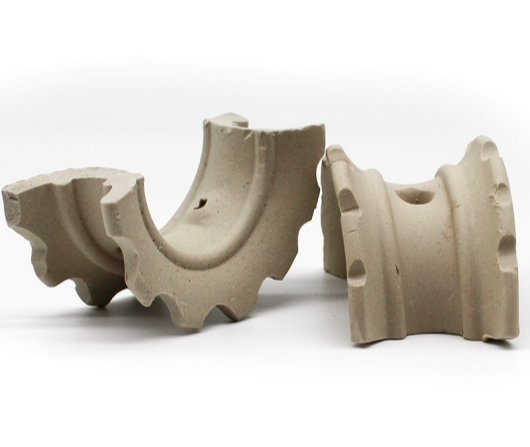
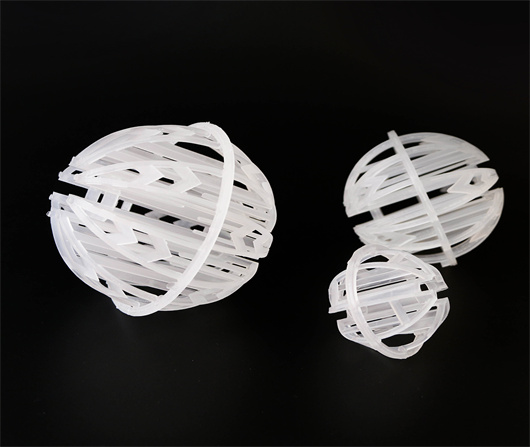
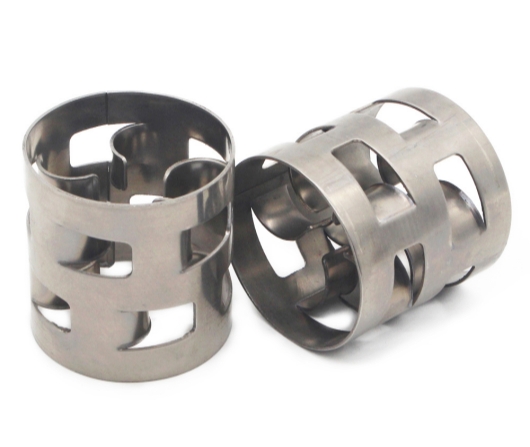
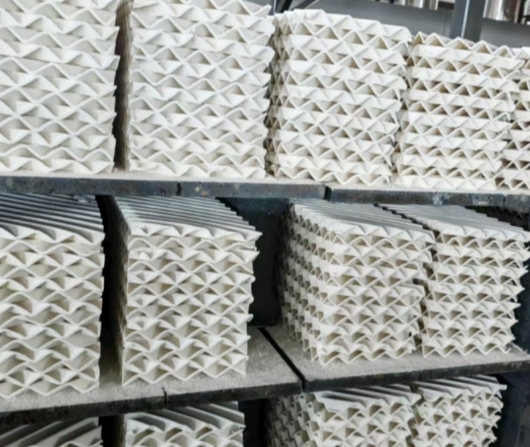
{ "@context": "https://schema.org", "@type": "Article", "headline": "Saddle Ring Packing: Technical Analysis for Petrochemical Tower Applications", "description": "Technical guide to saddle ring packing technology for industrial mass transfer applications in severe service conditions.", "author": { "@type": "Organization", "name": "Ayrtter" }, "publisher": { "@type": "Organization", "name": "Ayrtter", "logo": { "@type": "ImageObject", "url": "https://ayrtter.com/logo.png" } }, "datePublished": "2024-01-15", "dateModified": "2024-01-15", "mainEntityOfPage": { "@type": "WebPage", "@id": "https://ayrtter.com/saddle-ring/" } } { "@context": "https://schema.org", "@type": "FAQPage", "mainEntity": [ { "@type": "Question", "name": "What are the advantages of saddle ring packing?", "acceptedAnswer": { "@type": "Answer", "text": "Saddle ring packing offers excellent fouling resistance, corrosion resistance, and low pressure drop. The saddle-shaped design promotes uniform liquid distribution and efficient mass transfer, making it ideal for demanding industrial applications like petrochemical processing." } }, { "@type": "Question", "name": "How do I select saddle ring material for my process?", "acceptedAnswer": { "@type": "Answer", "text": "Material selection for saddle rings depends on process conditions: ceramic for high-temperature corrosive service, metal for strength and moderate corrosion, and plastic for chemical resistance at lower temperatures. Saddle ring selection should consider Total Cost of Ownership." } }, { "@type": "Question", "name": "How are saddle rings used in coal chemical processing?", "acceptedAnswer": { "@type": "Answer", "text": "In coal chemical syngas scrubbing, the open structure of saddle rings resists fouling from dust and tars. This design extends operational cycles and reduces maintenance requirements. Ceramic saddle rings are particularly effective in these harsh environments." } }, { "@type": "Question", "name": "What makes saddle ring packing cost-effective?", "acceptedAnswer": { "@type": "Answer", "text": "Saddle ring packing should be evaluated based on Total Cost of Ownership. While initial investment may be higher, low pressure drop reduces energy costs, and durability minimizes maintenance. Saddle rings often provide better lifecycle economics in demanding applications." } }, { "@type": "Question", "name": "How can I get saddle ring recommendations?", "acceptedAnswer": { "@type": "Answer", "text": "Ayrtter provides comprehensive technical support for saddle ring selection, including application analysis, performance simulation, and material recommendations based on your specific process requirements for saddle ring applications." } } ] } Home › Products › Random Packing › Saddle Ring Saddle Ring Packing: Technical Analysis for Petrochemical Tower Applications Saddle ring packing represents a proven solution for gas-liquid contact operations in demanding industrial environments. This technical guide examines the design principles, material selection, and performance characteristics of saddle ring technology for applications in petrochemical, chemical, and environmental processing. The unique geometric configuration of saddle rings provides distinct hydrodynamic advantages that make them particularly suitable for severe service conditions where reliability and efficiency are paramount. Technical Summary:This comprehensive analysis covers the design evolution of saddle ring technology, from early Berl saddles to advanced super saddle configurations. The guide examines material options for saddle rings including ceramic, metal, and polymer substrates, and provides a systematic framework for selecting optimal saddle ring packing based on Total Cost of Ownership principles for severe-service applications. The discussion includes performance validation data, operational case studies, and practical engineering recommendations for implementing saddle ring solutions in various industrial contexts. Hydrodynamic Principles and Design Evolution of Saddle Rings The distinctive saddle-shaped geometry of saddle ring packing serves several critical engineering functions. It maximizes available surface area for mass transfer, promotes uniform liquid distribution, minimizes channeling effects, and maintains low pressure drop characteristics. The evolution of saddle ring technology has been driven by continuous improvements in these hydrodynamic properties. Engineers have refined the basic saddle shape over decades to optimize the balance between surface area, void fraction, and structural integrity. Modern saddle ring designs incorporate sophisticated features that enhance performance while addressing common operational challenges in industrial towers. First Generation: Berl Saddles - The Foundation The original saddle ring design, known as the Berl saddle, featured solid ceramic construction. While representing a significant improvement over basic Raschig rings, its tendency to nest tightly within the bed limited efficiency by reducing effective void fraction and compromising liquid distribution. These early saddle rings established the fundamental geometric principles that would guide subsequent developments, though their performance was constrained by material limitations and manufacturing techniques available at the time. The Berl saddle's legacy lies in establishing the viability of saddle-shaped geometries for industrial mass transfer applications. Second Generation: Intalox® and Advanced Designs The introduction of asymmetrical, open-structure saddle ring designs incorporated internal struts that dramatically reduced inter-particle nesting. This advancement in saddle ring technology achieved significantly improved bed porosity and surface area utilization, establishing new performance benchmarks for random packing. The Intalox® saddle represented a breakthrough in design philosophy, moving from solid forms to engineered structures that optimized both geometric efficiency and manufacturing practicality. These second-generation saddle rings demonstrated measurable improvements in mass transfer efficiency and pressure drop characteristics across various operating conditions. Contemporary Designs: Super Saddle Variants Today's advanced saddle ring configurations feature further optimizations including reduced wall thickness, precision-formed openings, and enhanced surface texturing. These contemporary saddle ring designs deliver superior performance across three critical parameters: minimized pressure drop, increased hydraulic capacity, and enhanced resistance to fouling. Modern manufacturing techniques enable the production of saddle rings with precise dimensional tolerances and optimized surface characteristics that maximize interfacial area while maintaining structural integrity under demanding operating conditions. Technical Validation: Industry data confirm that modern saddle ring geometries can reduce system pressure drop by 30-50% compared to first-generation ring packings under equivalent conditions. This reduction directly translates to substantial energy savings in gas-handling equipment. Extensive testing in laboratory and industrial settings has validated the performance advantages of contemporary saddle ring designs across a range of operating conditions and process applications. The consistent performance improvements documented in multiple studies underscore the engineering sophistication embedded in modern saddle ring technology. Explore Saddle Ring Material Options: Ceramic Saddle Rings Metal Saddle Rings Plastic Saddle Rings Download Saddle Ring Guide Saddle Ring Performance in Demanding Industrial Applications The unique geometry of saddle rings provides distinct advantages for addressing common challenges in chemical process engineering. Understanding saddle ring benefits is essential for proper application selection. The hydrodynamic characteristics of saddle rings make them particularly effective in services where fouling, corrosion, or variable operating conditions present significant operational challenges. The following sections detail the performance attributes that distinguish saddle rings from alternative packing technologies in severe service applications. Fouling Resistance and Solids Management Capabilities In applications like coal-derived syngas scrubbing where entrained particulates are present, the non-planar, open structure of saddle rings minimizes deposit accumulation. The geometry creates natural pathways for solids passage, significantly extending operational cycles between maintenance shutdowns. Unlike some packing geometries that create stagnant zones where solids can accumulate, saddle rings maintain active flow paths that resist plugging and channel formation. This characteristic is particularly valuable in coal chemical and biomass processing applications where feed streams contain significant particulate matter that can compromise packing performance over time. Chemical Compatibility and Corrosion Resistance Properties Saddle rings are available in a wide range of chemically resistant materials including high-purity ceramics, corrosion-resistant alloys, and engineered polymers. This material versatility allows saddle rings to handle aggressive process streams containing acids, amines, and other corrosive media. The availability of specialized materials enables the selection of saddle rings specifically matched to the chemical environment, ensuring long-term performance reliability. For example, ceramic saddle rings offer exceptional resistance to mineral acids at elevated temperatures, while specialized polymer formulations provide excellent performance in halogenated hydrocarbon services where metal alloys would suffer accelerated corrosion. Energy Efficiency through Optimized Hydraulic Performance The inherently low pressure drop characteristic of saddle rings reduces power requirements for gas circulation equipment. Simultaneously, efficient liquid distribution enhances mass transfer efficiency, allowing process objectives to be met with smaller equipment or reduced energy input. The combination of low pressure drop and efficient mass transfer makes saddle rings particularly advantageous in energy-intensive separation processes where operating costs are significantly influenced by energy consumption. Field data from retrofitted towers consistently demonstrate measurable reductions in energy consumption following the installation of modern saddle ring packing configurations. Operational Stability Across Variable Process Conditions Saddle ring packing maintains stable liquid holdup and distribution across a broad range of flow rates. This hydrodynamic stability enables consistent process performance despite fluctuations in feed conditions—a critical requirement for modern continuous processes. The predictable performance of saddle rings across turndown ratios and load variations makes them suitable for applications where feed composition or flow rates vary according to upstream process conditions or product demand patterns. This operational flexibility represents a significant advantage in integrated chemical complexes where process units must respond to changing economic and operational requirements. Case Study Validation: A documented retrofit of a sulfuric acid drying tower with advanced ceramic saddle rings resolved chronic bed plugging issues while achieving a 15% improvement in mass transfer coefficient. installation also reduced system energy consumption by approximately 12%, validating performance claims in demanding service. The retrofit extended run times between maintenance shutdowns from an average of 90 days to over 300 days, demonstrating the tangible operational benefits achievable with properly selected saddle ring technology. This case exemplifies the potential performance improvements available through systematic saddle ring selection and application engineering. Systematic Saddle Ring Selection Methodology Optimal saddle ring performance requires a disciplined selection process that aligns packing properties with specific process requirements. This framework ensures technical suitability and economic optimization for saddle ring applications. The selection methodology should consider not only initial performance characteristics but also long-term reliability, maintenance requirements, and total cost of ownership. A systematic approach to saddle ring selection involves multiple evaluation criteria and should incorporate both technical and economic considerations to arrive at the most appropriate solution for each specific application. Material Comparison Matrix for Saddle Ring Selection Material Class Typical Materials Key Advantages Recommended Applications Limitations & Considerations Ceramic High-Alumina, Mullite, Acid-Resistant Formulations Superior corrosion/erosion resistance, thermal stability to ~400°C, excellent chemical inertness in acidic environments Concentrated acid/alkali service, high-temperature gas cleaning, abrasive particulate environments, sulfuric acid drying towers Thermal shock sensitivity requires careful temperature control, higher bed weight increases structural requirements, limited tensile strength compared to metals Metal 316L Stainless Steel, 2205 Duplex, Nickel Alloys (C-276, 625) High mechanical strength, excellent ductility, good thermal conductivity, suitable for pressure vessels and high mechanical stress applications Moderate corrosion services (amine, caustic), high-pressure towers, thermal cycling applications, services requiring frequent inspection or cleaning Chloride stress corrosion cracking risk in certain environments, requires precise alloy selection based on specific corrosion mechanisms, higher initial cost than ceramic options Polymer PP, PVDF, PPS, PTFE, E-CTFE Broad chemical resistance, low density reduces structural loads, economical fabrication for complex shapes, excellent performance in halogenated services Low-temperature scrubbers (<150°C), highly corrosive halogenated or oxidizing chemical services, applications where metallic contamination must be avoided Temperature limitations based on polymer glass transition temperatures, potential for creep and stress cracking under sustained load, UV degradation in outdoor applications Four-Step Saddle Ring Specification and Implementation Process Process Characterization and Requirements Definition: Document all relevant parameters including chemical composition, temperature ranges, pressure conditions, particulate loading characteristics, and separation efficiency requirements for saddle ring applications. This phase should include a thorough analysis of normal and upset operating conditions to ensure the selected saddle ring configuration can handle the full range of expected process variations. Material Selection and Compatibility Assessment: Utilize the comparison matrix and corrosion data to identify suitable saddle ring materials based on chemical compatibility and mechanical requirements. This assessment should consider not only the primary process stream but also potential contaminants, cleaning chemicals, and process upsets that could affect material performance over the expected service life. Geometry Optimization and Configuration Selection: Select appropriate saddle ring size and configuration based on tower diameter, required capacity, and efficiency targets. Consider factors such as bed height limitations, liquid distribution requirements, and expected turndown ratios. The selection should balance mass transfer efficiency with pressure drop considerations to optimize overall system performance. Performance Verification and Implementation Planning: Engage with technical specialists to validate saddle ring selection through process simulation and obtain certified performance data. Develop comprehensive implementation plans including installation procedures, startup protocols, and performance monitoring approaches to ensure successful commissioning and operation of the saddle ring installation. Total Cost of Ownership Analysis for Saddle Ring Evaluations: Evaluating saddle ring options requires consideration beyond initial purchase price. A comprehensive TCO analysis accounts for energy savings from low pressure drop, reduced maintenance frequency, and avoidance of production losses. This approach often reveals that high-performance saddle rings provide superior lifecycle economics. The TCO analysis should consider capital costs, installation expenses, energy consumption over the expected service life, maintenance requirements, and potential production losses during maintenance activities. In many cases, the operational savings achieved with optimized saddle ring selections justify premium initial investments through reduced operating costs and improved process reliability. Engineering Recommendations and Implementation Guidelines for Saddle Ring Applications Saddle ring technology continues to demonstrate its value as a reliable, efficient solution for severe-service mass transfer operations. Saddle rings combine proven hydrodynamic principles with continuous material science advancements to address evolving process challenges. Successful saddle ring implementation requires a systematic approach that prioritizes process compatibility and lifecycle economics. Based on industry experience and performance data, several key recommendations emerge for engineers specifying and implementing saddle ring technology in demanding industrial applications. First, engage with experienced technical partners early in the design process to leverage application knowledge and avoid common pitfalls in saddle ring selection. Second, consider the full operating envelope rather than just design conditions when specifying saddle ring characteristics. Third, implement comprehensive performance monitoring to validate design assumptions and identify optimization opportunities during operation. Fourth, establish regular inspection and maintenance protocols specific to saddle ring installations to maximize service life and maintain performance standards. Finally, document performance data systematically to build organizational knowledge and support future optimization initiatives. Technical Commentary:Selecting appropriate saddle ring packing represents a critical engineering decision with significant operational implications. Performance depends not only on inherent design but also on proper material selection and installation. For demanding applications in petrochemical, chemical, and environmental services, partnering with an experienced manufacturer like Ayrtter ensures access to technical expertise, validated performance data, and application-specific recommendations for saddle ring solutions. The optimal saddle ring selection balances hydraulic performance, mechanical integrity, and economic factors across the equipment's entire service life. Engineers should approach saddle ring specification as an integrated system design challenge rather than a simple component selection exercise, considering interactions between the packing, tower internals, process conditions, and operating philosophy to achieve optimal long-term performance. Professional Saddle Ring Technical Support and Engineering ServicesOur engineering team specializes in severe-service applications and saddle ring technology implementation. For detailed analysis of your specific requirements for saddle ring applications—whether for amine contactors, sour water strippers, chemical scrubbers, or other challenging services—we provide comprehensive technical consultation and saddle ring selection support. Our services include process analysis, material selection guidance, performance simulation, installation supervision, and commissioning support to ensure successful implementation of saddle ring solutions in your specific operating environment. Request Saddle Ring Technical Review Download Comprehensive White Paper Further Reading: Advanced Topics in Saddle Ring Technology Understanding material compatibility and performance optimization is essential for successful saddle ring implementation. Continue to our detailed guide on corrosion resistance mechanisms for various saddle ring materials, or explore our technical library for additional resources on packing technology, tower internals design, and mass transfer optimization strategies for industrial separation processes. Read Corrosion Resistance Guide → Explore Technical Library On This Page Technical Summary Design Evolution Performance Analysis Selection Methodology Implementation Guidelines Related Products Ceramic Tower Packing Structured Packing All Random Packing Tower Internals Popular Technical Articles Tower Internals Optimization Guide Advanced Mass Transfer Efficiency Techniques Corrosion Protection Strategies for Chemical Equipment Products Plastic Random Packing Metal Random Packing Ceramic Random Packing Structured Packing Tower Internals Industries Petrochemical Processing Coal Chemical Industry Environmental Applications Pharmaceutical Manufacturing Power Generation Industry Resources Technical Library & Resources Packing Selection Guides Application Case Studies Industry Standards Reference Engineering Calculation Tools About Ayrtter Company Overview & Capabilities Quality Certifications Manufacturing Facilities Contact Our Technical Team Engineering Career Opportunities © 2024 Ayrtter. All rights reserved. Professional Tower Internals & Packing Manufacturer | Reliable Solutions for Severe-Service Applications // Smooth scrolling for anchor links document.querySelectorAll('a[href^="#"]').forEach(anchor => { anchor.addEventListener('click', function (e) { e.preventDefault(); const targetId = this.getAttribute('href'); if(targetId === '#') return; const targetElement = document.querySelector(targetId); if(targetElement) { window.scrollTo({ top: targetElement.offsetTop - 20, behavior: 'smooth' }); history.pushState(null, null, targetId); } }); }); // Sticky sidebar adjustment function adjustSidebar() { const sidebar = document.querySelector('.sidebar'); if(window.innerWidth
Read More
Address : Intersection of Jinguang Avenue and Chongqing Middle Road, Anyuan Industrial Park, Anyuan District, Pingxiang City, Jiangxi
Tel :
Email :
WhatsApp :
IPv6 network supported