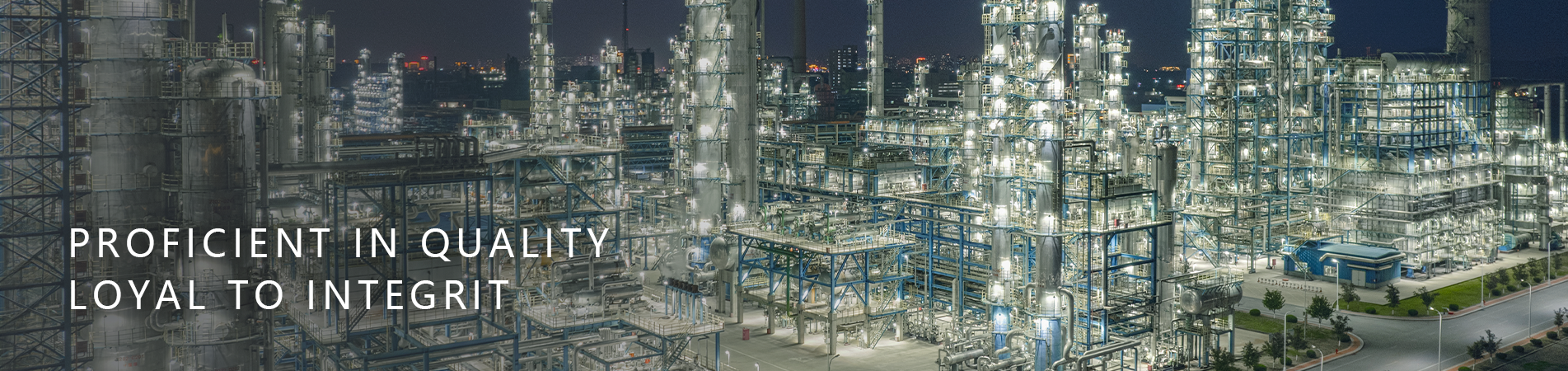
Engineer's Brief: The plastic VSP ring (also called inner arc ring) is a high-performance random packing featuring evenly folded inner arcs along the axial direction, alternately arranged. Its primary function is to promote uniform gas-liquid distribution, reduce channeling and wall flow, and improve mass transfer efficiency in absorption, desulfurization, and decarbonization towers. Made in PP, PE, PVC, CPVC, or PVDF, it delivers 20–30% better distribution uniformity than standard Pall rings in corrosive services where metal packings would fail.
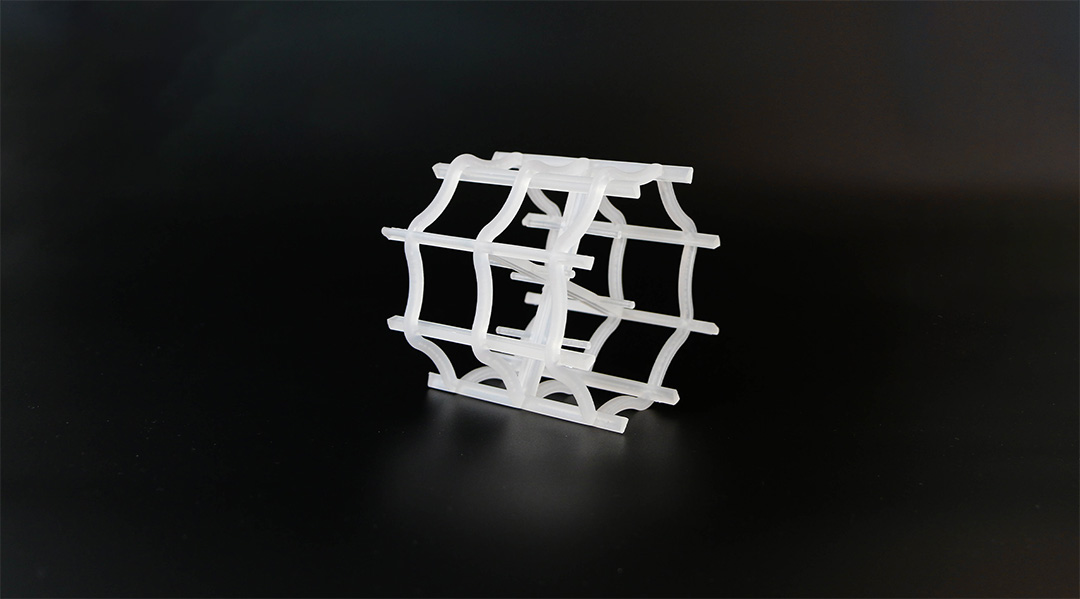
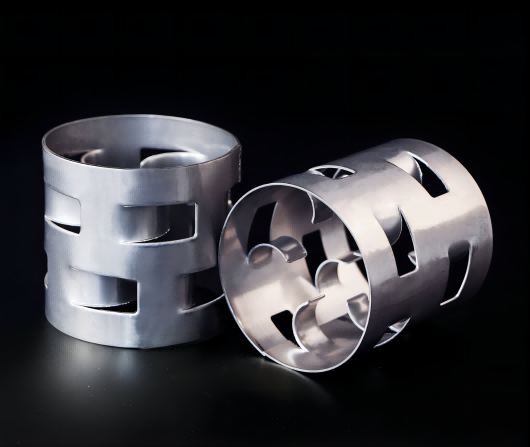
Figure 1: Plastic VSP Ring (Inner Arc Ring) — bulk PP and PE rings showing the characteristic alternating inner arcs and axial symmetry.
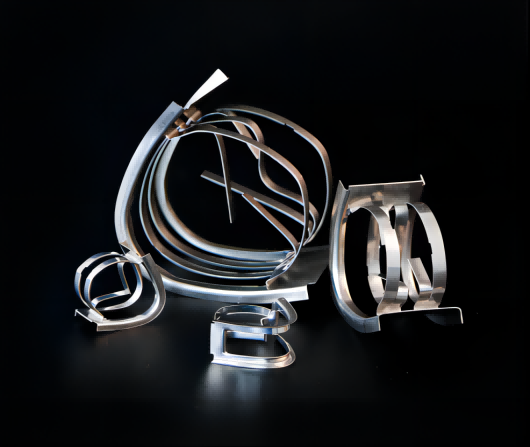
Unlike a smooth-walled ring packing, the VSP ring features a series of evenly folded inner arcs along the axial direction, alternately arranged. This geometric modification creates a saddle-like curved channel that disrupts straight-line fluid flow, breaking up laminar films and improving gas-liquid contact. The open arc structure maintains high voidage while the alternating arrangement prevents nesting.
The plastic VSP ring is molded from thermoplastic materials including PP, PE, PVC, CPVC, or PVDF — chosen based on service temperature and chemical environment. This makes it a direct alternative to the metal VSP ring (stainless steel 304/316) for corrosive applications where metal would suffer stress corrosion cracking.
Key geometric advantages:
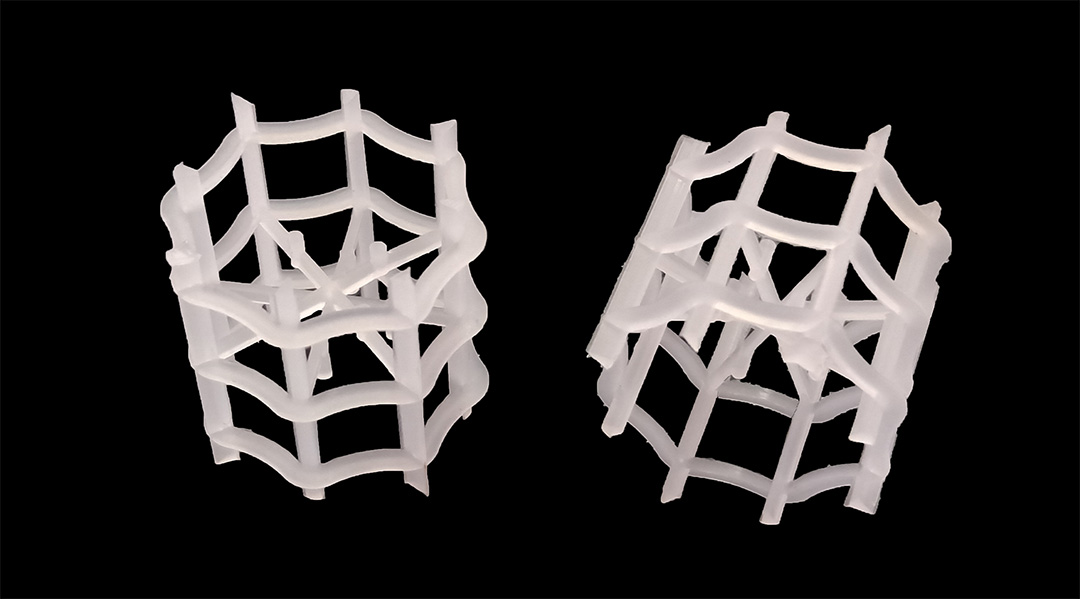
Figure 2: Close-up of VSP ring inner arc structure — the alternating folds create tortuous flow paths for better liquid spreading.
The plastic VSP ring serves four critical functions in tower operations. Each is rooted in its unique alternating inner arc geometry:
FXSINO manufactures plastic VSP rings in five thermoplastic materials. Selection depends on operating temperature, chemical compatibility, and mechanical requirements:
| Material | Max Temp | Chemical Resistance | Best For |
|---|---|---|---|
| PP (Polypropylene) | 100°C | Excellent to acids, alkalis | General absorption, FGD, hot water |
| PE (Polyethylene) | 80°C | Excellent; better UV resistance (black) | Ambient cooling, outdoor scrubbers |
| PVC | 60°C | Excellent to acids, chlorine | Chlor-alkali, acidic scrubbing |
| CPVC | 90°C | Superior to PVC at elevated temp | Hot acidic service |
| PVDF | 150°C | Excellent to most chemicals incl. halogens | High-temp amine, aggressive solvents |

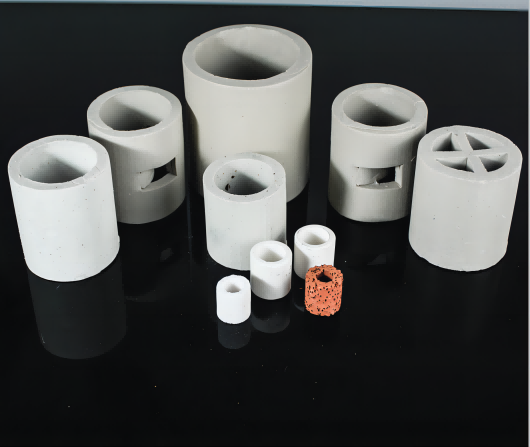
Figure 3: Material options — white PP, black PE, grey PVC, and natural PVDF VSP rings for different service conditions.
How does the plastic VSP ring compare against other common plastic random packings?
| Packing Type (50mm) | Voidage (%) | ΔP @ F=1.5 (Pa/m) | Surface Area (m2/m3) | Relative Cost |
|---|---|---|---|---|
| Plastic VSP Ring | 88–92 | 70–90 | 95–110 | $$ |
| Plastic Pall Ring | 90–92 | 80–100 | 100–120 | $$ |
| Plastic Saddle (Intalox) | 78–82 | 120–150 | 85–100 | $ |
| Multi-ball Hollow Ball | ≥ 95 | 40–60 | 160–200 | $ |
Verdict: Plastic VSP rings offer the best resistance to channeling and wall flow among plastic random packings, making them ideal for corrosive absorption and desulfurization. Choose Pall rings if you need maximum efficiency (lower HETP); choose VSP rings if you need superior distribution uniformity and corrosion resistance.
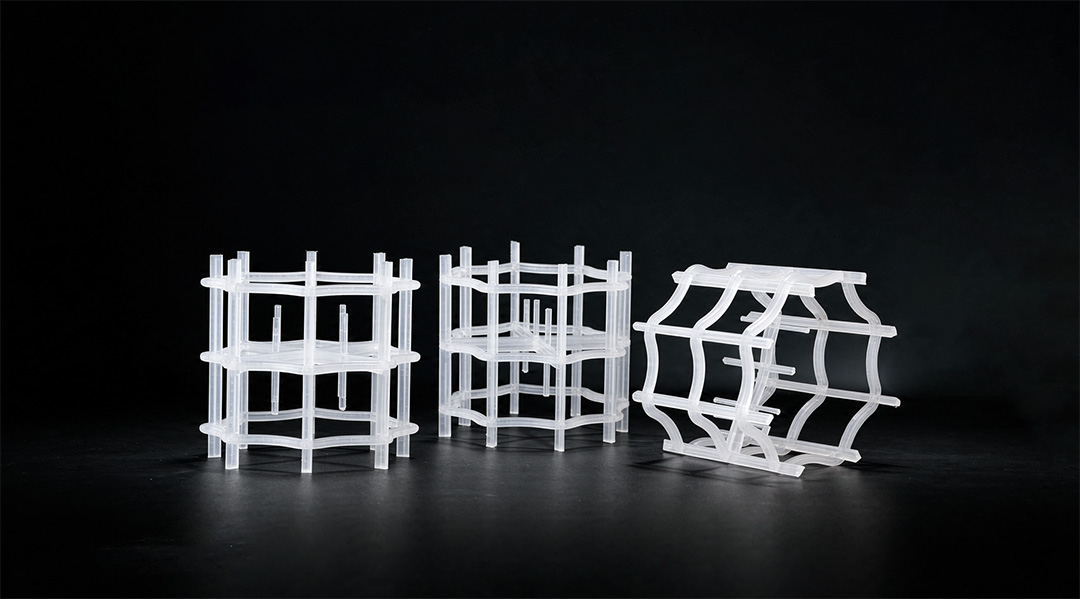
Figure 4: VSP ring packing being charged into an absorption tower — even distribution ensures uniform gas-liquid contact.
Q: VSP ring vs. Pall ring — which should I choose?
A: Pall rings have internal windows (fingers) that create more internal surface contact, giving slightly better mass transfer (lower HETP). VSP rings have no windows but feature alternating inner arcs that excel at preventing channeling and wall flow. Choose Pall rings for distillation/efficiency-critical service; choose VSP rings for corrosive absorption and services prone to maldistribution.
Q: Can I use plastic VSP rings in high-temperature amine service?
A: PP grade handles up to 100°C continuously; PVDF handles up to 150°C. For amine regenerator reboiler temperatures (120–150°C), PVDF is recommended. For higher temperatures, metal VSP rings (304/316 SS) are the correct choice.
Q: What is the bulk density of plastic VSP rings?
A: For 50mm PP VSP rings, expect ~60–70 kg/m3 (including ~5% void settling). PE is slightly heavier at ~75–85 kg/m3. This is light enough that most towers don't need structural reinforcement — unlike ceramic packings at 700+ kg/m3.
FXSINO is a manufacturer of tower packing & internals — plastic VSP rings, Pall rings, support grids, and liquid distributors. Custom sizes, PP/PE/PVC/CPVC/PVDF materials, shipped worldwide.
Tell us your tower diameter, bed depth, service fluid, operating temperature, and preferred material. We'll recommend the right ring size, calculate total volume, and provide a same-day quote with lead time. FXSINO supplies complete packed tower solutions — from support grids and bed limiters to liquid distributors.
Contact FXSINO: jackieqiu9202@gmail.com | +86 18507999558
 Address : Intersection of Jinguang Avenue and Chongqing Middle Road, Anyuan Industrial Park, Anyuan District, Pingxiang City, Jiangxi
 Tel : +86-18507999558
 Email : sales@fxsino.com
 WhatsApp :
+86-18507999558
 IPv6 network supported Sitemap | XML | Blog | Privacy Policy