NEWS

News

Home

News

  • Metal Wire Gauze Packing: Maximum Efficiency for High-Purity Separation
    June 18, 2026

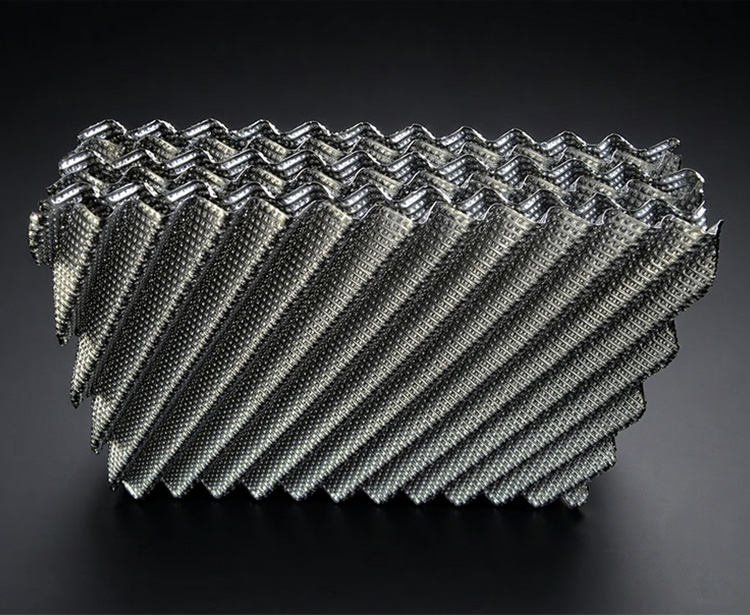
        { "@context": "https://schema.org", "@type": "FAQPage", "mainEntity": [{ "@type": "Question", "name": "What is the difference between wire gauze and sheet metal structured packing?", "acceptedAnswer": { "@type": "Answer", "text": "Wire gauze uses woven mesh, offering 3-5x more theoretical plates per meter than sheet metal. However, it is far more expensive and prone to clogging. Sheet metal is for bulk industrial separation; gauze is for high-purity lab and pilot plants." } },{ "@type": "Question", "name": "Can metal gauze packing be cleaned?", "acceptedAnswer": { "@type": "Answer", "text": "Cleaning is difficult. Due to the microscopic capillary action of the mesh, solvents often get trapped. High-pressure steam cleaning is recommended, but aggressive mechanical cleaning will destroy the mesh structure." } }] } Figure 1: Precision woven wire gauze packing offering ultra-low HETP. Metal Wire Gauze Packing: Maximum Efficiency for High-Purity Separation When every theoretical plate counts, Metal Wire Gauze Packing is the undisputed champion. Unlike sheet metal packing, the woven mesh creates microscopic surface tension, allowing liquids to spread into a hyper-thin film. This results in an extremely low HETP (Height Equivalent to a Theoretical Plate), making it essential for pharmaceutical synthesis, isotope separation, and high-vacuum distillation. This guide explains how to handle and specify gauze packing to achieve unmatched purity without catastrophic flooding.   Part 1: Wire Gauze vs. Sheet Metal Packing Choosing between gauze and sheet metal depends entirely on your efficiency requirements. Here is the showdown: Performance & Property Comparison Feature Wire Gauze (e.g., 250AX) Sheet Metal (e.g., 250Y) Best Application HETP 0.2 - 0.5 meters 0.4 - 0.8 meters Gauze for high purity Pressure Drop Ultra Low Low Gauze for vacuum Fouling Resistance Poor Good Sheet for dirty feeds Part 2: 3 Engineering Traps with Wire Gauze Trap 1: Instant Flooding from Welding Slag The mesh openings are tiny (usually 40-100 mesh). A single drop of welding slag or a rust particle from the vessel can plug dozens of cells. Never install gauze packing before hydrostatic testing and mechanical cleaning of the tower shell are complete. Trap 2: Capillary Action Failure Gauze relies on surface tension to spread the liquid. If the liquid is too viscous or the surface tension is too low (e.g., fluorinated solvents), the liquid won't spread, creating dry spots. Verify fluid properties against the gauze's wettability limits. Trap 3: Mechanical Damage During Loading The mesh is delicate. Dragging blocks across each other or dropping them will snag the wires, destroying the geometry. Handle with clean cotton gloves and use padded vacuum lifts for installation. Part 3: FXSINO Gauze Selection Guide Mesh Count: Higher mesh (e.g., 100) increases efficiency but reduces capacity. 40-60 mesh is standard for most distillations. Crimp Type: Specify "Double Crimp" for high vibration environments to prevent unraveling of the weave. Alloy Selection: For corrosive services, 316L is standard. For Chloride stress cracking, upgrade to Hastelloy C276 or Monel. Block Size: Ensure blocks fit through the manway with a 25mm clearance to prevent bending during entry. Request Metal Gauze Packing Quotation ✅ Precision Weaving ✅ High Surface Area ✅ Lab Scale to Industrial FXSINO manufactures high-precision wire gauze packing for the most demanding separations. Send us your required HETP and throughput for a customized packing solution. Contact FXSINO: [[jackieqiu9202@gmail.com]] | [[18507999558]] © 2026 Jiangxi FXSINO Mass Transfer Technology Co., Ltd. All Rights Reserved.

    Read More
  • Ceramic Structured Packing: The Ultimate Solution for Extreme Corrosion & Heat
    June 18, 2026

        { "@context": "https://schema.org", "@type": "FAQPage", "mainEntity": [{ "@type": "Question", "name": "Can ceramic structured packing replace metal packing in sulfuric acid service?", "acceptedAnswer": { "@type": "Answer", "text": "Absolutely. Ceramic structured packing is the standard for 98% concentrated sulfuric acid drying towers and absorption towers due to its complete immunity to acid corrosion, unlike stainless steel which would rapidly fail." } },{ "@type": "Question", "name": "Is ceramic packing fragile during installation?", "acceptedAnswer": { "@type": "Answer", "text": "Yes, ceramics are brittle. Unlike plastic or metal, they cannot withstand impact. Installation requires careful sock-loading or vacuum lifting to prevent chipping the corrugated edges." } }] } Figure 1: Glazed Ceramic Structured Packing with high crush strength. Ceramic Structured Packing: The Ultimate Solution for Extreme Corrosion & Heat When process temperatures exceed 200°C or involve highly concentrated acids (98% H2SO4, HCl), metals and plastics fail. Ceramic Structured Packing combines the efficiency of modern geometry with the chemical inertness of ceramics. It is the gold standard for sulfuric acid plants, caustic scrubbers, and high-temperature regenerative thermal oxidizers (RTOs). This guide explains how to engineer ceramic packing systems to avoid breakage and maximize thermal efficiency.   Part 1: Ceramic vs. Metal vs. PPH in Aggressive Service Choosing the right substrate is critical for safety and longevity. Here is the showdown: Material Property Comparison Material Max Temp Acid Resistance Best Application Ceramic (Porcelain) 1200°C Excellent H2SO4 Dry Towers, RTOs Hastelloy C276 600°C Good Chloride Service, Pharmaceuticals PPH 110°C Fair Mild Acid Scrubbing Part 2: 3 Engineering Traps with Ceramic Packing Trap 1: Thermal Shock Fracture Ceramics have low thermal conductivity. Rapid heating or cooling (e.g., cold water wash in a hot tower) causes uneven expansion, leading to cracks. Always ramp temperatures slowly (max 50°C/hour) during start-up and shutdown. Trap 2: Support Grid Overload Ceramic packing is extremely heavy (density ~2,400 kg/m³). A 6-meter bed can exert massive pressure on the support plate. Reinforce the support grid with I-beams and ensure the free area is >75% to prevent crushing. Trap 3: Chipping During Installation The corrugated edges of structured ceramic blocks are sharp and brittle. Dropping them creates microfractures that propagate under stress. Use padded slings or vacuum lifters; never drop blocks directly onto each other. Part 3: FXSINO Ceramic Selection Guide Glaze Type: Specify "Acid-Glazed" for sulfuric service to reduce surface tension and improve wettability. Crush Strength: For towers > 8m tall, request high-density alumina content (>65%) to prevent compression failure. Block Dimensions: Standard blocks are 395x195mm. Ensure your manway is large enough for access (minimum 600mm diameter). Joint Sealing: Use acid-proof cement or ceramic fiber rope between layers to prevent vapor bypass. Request Ceramic Packing Quotation ✅ High Alumina Content ✅ ISO 9001 Quality ✅ Custom Block Shapes FXSINO supplies precision-engineered ceramic structured packing for the world's most demanding chemical plants. Contact us for technical drawings and bulk pricing. Contact FXSINO: [[jackieqiu9202@gmail.com]] | [[18507999558]] © 2026 Jiangxi FXSINO Mass Transfer Technology Co., Ltd. All Rights Reserved.

    Read More
  • Trough Liquid Distributor: The Heart of Packed Column Efficiency
    June 17, 2026

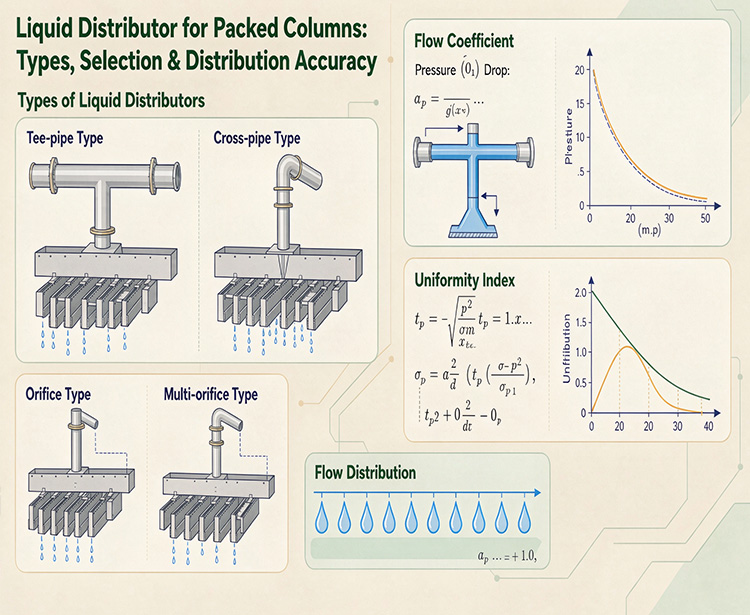
        { "@context": "https://schema.org", "@type": "FAQPage", "mainEntity": [{ "@type": "Question", "name": "What is the difference between a trough distributor and a spray nozzle?", "acceptedAnswer": { "@type": "Answer", "text": "Trough distributors provide a gravity-fed, uniform flow via orifices, offering larger free area and less clogging than spray nozzles. Nozzles are pressurized and prone to plugging in dirty services." } },{ "@type": "Question", "name": "How many drip points are needed per square meter?", "acceptedAnswer": { "@type": "Answer", "text": "For structured packing, a minimum of 100-150 drip points/m² is required to prevent dry spots. For random packing like Raschig Rings, 30-50 points/m² is usually sufficient." } }] } Figure 1: Dual-stage trough distributor ensuring uniform irrigation across the packing bed. Trough Liquid Distributor: The Heart of Packed Column Efficiency A packed column is only as good as its liquid distributor. Trough Distributors (also known as Pan Distributors) are the industry standard for large-diameter towers, providing superior flow capacity and resistance to fouling. Unlike spray nozzles, they rely on gravity and precise orifice placement to ensure uniform wetting and prevent maldistribution. This guide covers the engineering essentials to ensure your tower operates at peak efficiency without premature flooding.   Part 1: Trough vs. Pipe vs. Pan Distributors Selecting the right distributor type is critical for hydraulic performance. Here is how trough distributors compare: Distributor Type Comparison Type Max Capacity Clog Resistance Typical Use Case Dual-Trough Very High Excellent Large Dia. Towers (>1m) Spray Nozzle Medium Poor Small Towers, Clean Liquids Pan Distributor Low Good Vacuum Service Part 2: 3 Engineering Traps with Trough Distributors Trap 1: The Leveling Catastrophe Even a 3mm deviation from level across a 2-meter trough can cause 20% flow maldistribution. Always install adjustable support legs and verify levelness with a digital spirit level before welding the unit in place. Trap 2: Orifice Erosion & Wear In slurry services or systems with high suspended solids, the small orifice holes wear out quickly, enlarging and changing the flow dynamics. Specify hardened alloys (e.g., 410S) or use larger orifice sizes to extend service life. Trap 3: Vapor Pinching (Pressure Drop) Trough distributors have lower free area than packing. If the vapor velocity under the troughs is too high, it creates a pressure drop spike, leading to flooding. Maintain a minimum vapor velocity of less than 60% of the packing's flood velocity. Part 3: FXSINO Distributor Selection Guide Orifice Count: Calculate required drip points based on packing type (Structured needs more points than random). Weir Height: For high turndown ratios, specify a taller weir to maintain a consistent head of liquid. Material Match: Use the same alloy as the vessel to prevent galvanic corrosion (e.g., 316L vessel = 316L distributor). Flange Connection: Ensure the inlet flange matches your piping. Consider a flanged connection for easy removal during maintenance. Request Trough Distributor Quotation ✅ Laser Cutting Precision ✅ Hydraulic Simulation ✅ ASME BPE Compliant FXSINO fabricates custom trough distributors for towers up to 8 meters in diameter. Send us your tower drawings or process data for a detailed engineering proposal. Contact FXSINO: [[jackieqiu9202@gmail.com]] | [[18507999558]] © 2026 Jiangxi FXSINO Mass Transfer Technology Co., Ltd. All Rights Reserved.

    Read More
  • Environmental Balls: Lightweight Bio-Media for Air & Water Treatment
    June 13, 2026

        { "@context": "https://schema.org", "@type": "FAQPage", "mainEntity": [{ "@type": "Question", "name": "What is the difference between Environmental Balls and Pall Rings?", "acceptedAnswer": { "@type": "Answer", "text": "Environmental Balls (Eco Balls) have a much higher void fraction (>95%) and lower pressure drop than Pall Rings, making them ideal for biological aerated filters (BAF) and lightweight scrubbers." } },{ "@type": "Question", "name": "Can Environmental Balls float in water?", "acceptedAnswer": { "@type": "Answer", "text": "Yes, standard PP Environmental Balls have a density less than water (0.92 g/cm³) and will float. For submerged moving bed biofilm reactors (MBBR), special sinking grades with fillers are required." } }] } Figure 1: High-voidage Environmental Balls (Eco Balls) for low-pressure drop applications. Environmental Balls: Lightweight Bio-Media for Air & Water Treatment When weight is a constraint and pressure drop must be minimized, Environmental Balls (also known as Eco Balls or Bio Balls) outperform traditional structured packing. Their spherical design and high void space allow for excellent air circulation and biomass growth, perfect for VOC scrubbers, deodorization towers, and MBBR wastewater treatment. This guide explains how to deploy Environmental Balls to reduce fan energy costs and prevent media clogging.   Part 1: Environmental Balls vs. Traditional Random Packing Environmental Balls trade some mass transfer efficiency for drastically reduced weight and pressure drop. Here is the comparison: Performance Comparison Table Packing Type Void Fraction Weight (kg/m³) Best Application Environmental Ball >95% ~85 kg/m³ Bio-filters, Odor Control Pall Ring ~90% ~100 kg/m³ General Absorption Ceramic Saddle ~70% ~700 kg/m³ High Temp Acid Part 2: 3 Engineering Traps with Environmental Balls Trap 1: Biomass Overgrowth & Clogging In wastewater treatment (MBBR), the balls can become so heavy with biofilm that they sink or clump together. Design for regular backwashing or include mechanical agitators to slough off excess biomass. Trap 2: Wind Shear in Empty Towers Because they are lightweight, high gas velocities can lift the top layer of balls like a fluidized bed, causing them to collide and break. Install a mist eliminator or hold-down grid at the top of the bed. Trap 3: UV Degradation Outdoors Standard PP Environmental Balls degrade quickly under direct sunlight. If used in open-top bio-trickling filters, specify UV-stabilized resin or carbon black masterbatch to prevent embrittlement. Part 3: FXSINO Environmental Ball Selection Guide Diameter Choice: 25mm for high surface area (biofilm); 50mm or 90mm for high airflow/low pressure drop. Internal Structure: Choose "Grid Style" for structural integrity or "Fin Style" for maximum surface area. Density Control: For floating applications (cooling towers), use pure PP. For sinking (MBBR), request Calcium Carbonate filled PP. Color Coding: Use different colors (Black, White, Blue) to distinguish media batches during maintenance. Request Environmental Ball Quotation ✅ Non-Toxic Virgin PP ✅ High Void Space ✅ Anti-UV Options FXSINO supplies millions of Environmental Balls for global bio-filter projects. Send us your required volume and application details for a fast quote. Contact FXSINO: [[jackieqiu9202@gmail.com]] | [[18507999558]] © 2026 Fxsino Petrochemical PackingCo.,Ltd All Rights Reserved.

    Read More
  • Nutter Ring: High-Capacity Random Packing for Demanding Services
    June 12, 2026

        { "@context": "https://schema.org", "@type": "FAQPage", "mainEntity": [{ "@type": "Question", "name": "Why choose Nutter Rings over Pall Rings?", "acceptedAnswer": { "@type": "Answer", "text": "Nutter Rings feature a unique 'C' cut and internal ribs that create micro-mixing. They typically offer 30-50% higher capacity and lower pressure drop than standard Pall Rings in the same size." } },{ "@type": "Question", "name": "Are Nutter Rings suitable for vacuum distillation?", "acceptedAnswer": { "@type": "Answer", "text": "Yes, the low pressure drop characteristic of Nutter Rings makes them ideal for vacuum services where every Pascal of pressure loss counts towards energy savings." } }] } Figure 1: Metal Nutter Rings featuring enhanced micro-mixing geometry. Nutter Ring: High-Capacity Random Packing for Demanding Services When traditional Pall Rings reach their flood point, Nutter Rings provide the next level of performance. With a patented design featuring horizontal ribs and vertical "C" cuts, these rings generate intense micro-mixing, reducing pressure drop while increasing throughput for vacuum distillation, CO2 scrubbing, and high-viscosity systems. This guide explains how to implement Nutter Rings to debottleneck existing towers and optimize new designs.   Part 1: Nutter Ring vs. Pall Ring vs. Raschig Ring Nutter Rings are engineered for efficiency. Here is how they compare to conventional random packings: Performance & Material Comparison Packing Type Capacity Increase Pressure Drop Recommended Material Nutter Ring +40% Very Low Stainless Steel, Titanium Pall Ring Baseline Medium Plastic, Metal, Ceramic Raschig Ring -30% High Ceramic, Metal Part 2: 3 Engineering Traps with Nutter Rings Trap 1: Plugging in Fouling Services The complex geometry with horizontal ribs is excellent for mass transfer but can trap fibrous materials or scale. Avoid using small sizes (e.g., #25) in feed streams containing solids. Stick to #50 or larger for dirty services. Trap 2: Improper Loading Technique Unlike simple cylinders, Nutter Rings have directional cuts. While random packing doesn't require orientation, dumping them too fast can cause interlocking. Use a sock-loading method to ensure a loose, randomized bed and prevent nesting. Trap 3: Overlooking Wall Flow Due to their high efficiency, Nutter Rings require excellent liquid distribution. If the distributor has dry spots, the efficiency drops sharply. Ensure your L/D ratio (bed height to diameter) does not exceed 8:1 without intermediate redistribution. Part 3: FXSINO Nutter Ring Selection Guide Alloy Selection: For corrosive services, 316L is standard. For Chloride stress cracking, upgrade to Duplex 2205 or Titanium. Size Optimization: Use #25 for high-efficiency vacuum columns; use #50 or #90 for atmospheric absorbers. Wall Thickness: Specify "Heavy Duty" (e.g., 0.5mm for metal) for high vibration environments to prevent rib fatigue. Surface Area: Nutter Rings have higher effective surface area than Pall Rings. Recalculate your HETP (Height Equivalent to a Theoretical Plate) before ordering. Request Nutter Ring Quotation ✅ Precision Stamping ✅ High Efficiency Design ✅ Full Alloy Range FXSINO manufactures high-performance Nutter Rings to exacting tolerances. Submit your process conditions for a hydraulic rating report and competitive pricing. Contact FXSINO: [[jackieqiu9202@gmail.com]] | [[18507999558]] © 2026 Fxsino Petrochemical PackingCo.,Ltd All Rights Reserved.

    Read More
  • Raschig Rings: The Original Random Packing for Cost-Effective Mass Transfer
    June 12, 2026

        { "@context": "https://schema.org", "@type": "FAQPage", "mainEntity": [{ "@type": "Question", "name": "What is the difference between Raschig Rings and Pall Rings?", "acceptedAnswer": { "@type": "Answer", "text": "Raschig Rings are simple cylindrical tubes with no internal structure, offering lower cost but higher pressure drop. Pall Rings have windows and internal fingers, providing better liquid distribution and lower pressure drop." } },{ "@type": "Question", "name": "Can ceramic Raschig Rings be used in strong acid?", "acceptedAnswer": { "@type": "Answer", "text": "Yes, ceramic (porcelain) Raschig Rings have excellent resistance to hot concentrated sulfuric acid, nitric acid, and organic solvents where plastic packing would fail." } }] } Figure 1: Standard Ceramic Raschig Rings, the workhorse of random packing. Raschig Rings: The Original Random Packing for Cost-Effective Mass Transfer Invented in 1914, the Raschig Ring remains the most economical solution for absorption, stripping, and distillation towers. While newer packings offer lower pressure drop, Raschig Rings provide unmatched chemical resistance at a fraction of the cost, especially in high-temperature ceramic applications. This guide covers how to select the right material (Ceramic, Metal, or Plastic) and avoid common pitfalls like breakage and high-pressure drop.   Part 1: Ceramic vs. Metal vs. Plastic Raschig Rings The choice of material defines the operational limits. Here is the breakdown for selecting your Raschig Rings: Raschig Ring Material Properties Material Max Temp Chemical Resistance Best Application Ceramic / Porcelain 1200°C Excellent (Acids) H2SO4 Drying Towers, High Heat Metal (SS304/316) 400°C Good (Broad) Hydrocarbon Distillation, Heat Shock Plastic (PP/PVC) 90°C Good (Bases) Water Treatment, Caustic Scrubbing Part 2: 3 Engineering Traps with Raschig Rings Trap 1: Wall Effect & High Pressure Drop Due to their simple shape, Raschig Rings have a larger "wall effect" (liquid channeling along the tower walls). To mitigate this, use multiple sizes or ensure proper liquid distributors are installed above the bed. Trap 2: Ceramic Breakage During Loading Ceramic rings are brittle. Dropping them from the top of a 10-meter tower will shatter them into dust, clogging the support plate. Use a loading chute or sock-loading technique to minimize free-fall distance. Trap 3: Incorrect Size Ratio If the ring diameter is too large relative to the tower diameter (exceeding 1/8th of the tower ID), severe channeling occurs. Always maintain a tower-to-ring diameter ratio > 8:1. Part 3: FXSINO Raschig Ring Selection Guide Size Matters: 25mm for general absorption; 50mm for high gas flow; 16mm for laboratory columns. Aspect Ratio: Standard is 1:1 (Height = Diameter). Custom ratios available for specific pressure drop requirements. Bulk Density Check: Ensure your support grid can handle the weight. Ceramic packing is extremely heavy (up to 800 kg/m³). Surface Finish: For ceramic, specify "glazed" if product sticking or fouling is a concern. Request Raschig Ring Quotation ✅ ISO 9001 Certified✅ Acid Resistance Tested✅ Bulk Stock Available FXSINO supplies millions of Raschig Rings monthly for global chemical plants. Send us your required size (16mm, 25mm, 38mm, 50mm, 76mm) and material for a competitive quote. Contact FXSINO: [[jackieqiu9202@gmail.com]] | [[18507999558]] © 2026 Fxsino Petrochemical PackingCo.,Ltd All Rights Reserved.

    Read More
  • PPH Structured Packing: The High-Temperature Alternative to PVC & RPP
    June 05, 2026

        { "@context": "https://schema.org", "@type": "FAQPage", "mainEntity": [{ "@type": "Question", "name": "What is the difference between PPH and standard PP packing?", "acceptedAnswer": { "@type": "Answer", "text": "PPH (Homopolymer) has higher heat deflection temperature (~110°C) and better chemical resistance than standard PP (Copolymer). PPH is harder and more brittle, ideal for high-temperature towers." } },{ "@type": "Question", "name": "Can PPH packing be used in food processing?", "acceptedAnswer": { "@type": "Answer", "text": "Yes, virgin PPH complies with FDA standards for food contact and is often used in pharmaceutical extraction columns due to its high purity and low extractables." } }] } Figure 1: PPH Structured Packing with high surface area for efficient mass transfer. PPH Structured Packing: The High-Temperature Alternative to PVC & RPP When your process temperature exceeds 80°C, standard Polypropylene (PP) begins to soften and deform. PVC becomes brittle. For applications like high-temperature scrubbing, pharmaceutical extraction, or chlorine service, PPH (Polypropylene Homopolymer) is the optimal balance of chemical resistance and thermal stability. This guide explains how to leverage PPH Structured Packing to prevent tower flooding and maintain separation efficiency in aggressive thermal environments.   Part 1: PPH vs. PP vs. PVC: Material Showdown Choosing the right polymer is critical. Here is how PPH stacks up against common alternatives in tower packing: Polymer Property Comparison Material Max Continuous Temp Tensile Strength Best Application PPH (Homopolymer) 100-110°C High Hot Acid Scrubbing, Chlorine RPP (Random PP) 80-90°C Medium Ambient Temp Absorption PVC 60°C High Cold Water/Chlorination Part 2: 3 Engineering Traps with PPH Packing Trap 1: Creep Deformation Under Load PPH is stiffer than PE but can undergo "creep" (slow deformation) under constant mechanical load at high temperatures. Never stack PPH beds higher than 6 meters without intermediate supports or using thicker gauge sheets. Trap 2: Thermal Expansion Coefficient Plastics expand significantly more than steel. For every 10°C rise, PPH expands ~1.5mm per meter. If the packing is fixed rigidly at the top, it will buckle. Design for free vertical expansion. Trap 3: Oxidizer Sensitivity While PPH resists acids well, it is susceptible to strong oxidizers (e.g., Chlorine, Bromine, Permanganate). These chemicals attack the polymer chain, leading to embrittlement. Verify oxidizer concentration before specifying PPH. Part 3: FXSINO PPH Selection Checklist Beta Ratio: Select 250Y for high efficiency (e.g., distillation) or 500X for high capacity (e.g., cooling towers). Sheet Thickness: For towers > 4m tall, request 0.8mm or 1.0mm thickness to prevent buckling. UV Protection: If the tower is outdoors, insist on carbon black or UV stabilizers. Support Grid: Ensure the grid has >90% free area to prevent backup of liquids. Virgin Resin: Specify "No Regrind" to ensure consistent melting points and mechanical strength. Request PPH Structured Packing Quotation ✅ FDA Grade Virgin Resin✅ CNC Laser Cutting✅ 3rd Party Test Reports FXSINO manufactures high-precision PPH Structured Packing tailored to your tower diameter. Send us your process data for a free hydraulic calculation and quotation within 24 hours. Contact FXSINO: [[jackieqiu9202@gmail.com]] | [[18507999558]] © 2026 Jiangxi FXSINO Mass Transfer Technology Co., Ltd. All Rights Reserved.

    Read More
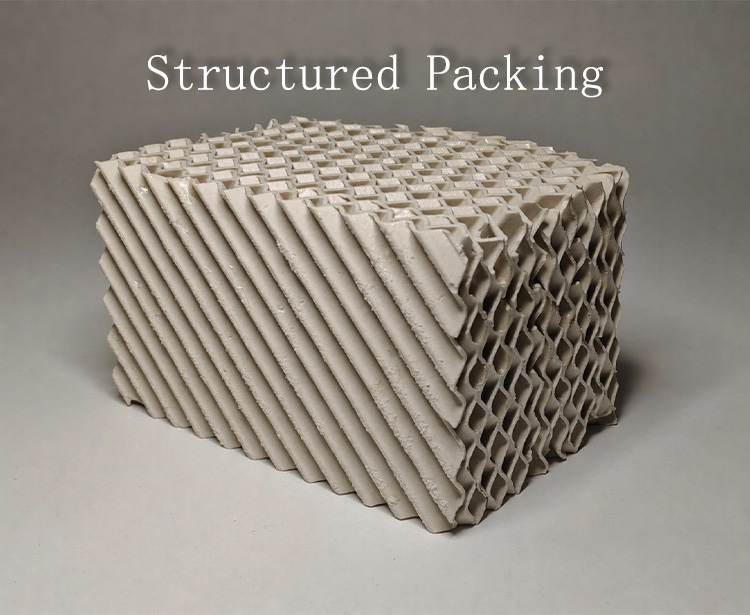
  • Ceramic Structured Packing for Sulfuric Acid Drying
    June 05, 2026

      { "@context": "https://schema.org", "@type": "Article", "headline": "Ceramic Structured Packing for Sulfuric Acid Drying Towers", "description": "Technical guide for selecting Ceramic Structured Packing (250Y/350Y) in 98% Sulfuric Acid drying towers.", "image": "https://www.fxsino.com/storage/uploads/images/202606/05/ceramic-in-acid-tower.jpg", "author": { "@type": "Organization", "name": "FXSINO Mass Transfer Technology" }, "publisher": { "@type": "Organization", "name": "FXSINO", "logo": { "@type": "ImageObject", "url": "https://www.fxsino.com/logo.png" } }, "mainEntityOfPage": { "@type": "WebPage", "@id": "https://www.fxsino.com/guides/ceramic-packing-sulfuric-acid-tower" } } Figure 1: 250Y Ceramic Packing showing corrugated sheet structure. Ceramic Structured Packing for Sulfuric Acid Drying Towers In the production of sulfuric acid or non-ferrous metal smelting, the drying tower handles the most aggressive condition: concentrated H₂SO₄ (93-98%). Metal packings corrode rapidly, while plastic packings cannot withstand the exothermic heat of absorption. Ceramic Structured Packing is the industry benchmark for this service. This guide explains how to select the right ceramic grade and avoid the operational traps that lead to tower flooding or packing collapse.   Part 1: Material Selection for Acid Service Not all ceramics are created equal. For sulfuric acid towers, the choice usually comes down to these two types: Ceramic Material Comparison Material Type Acid Resistance Thermal Shock Application Chemical Porcelain Excellent (<98% H₂SO₄) Moderate Standard Drying Towers Alumina Ceramic Superior (Fuming Acid) High High Temp / Oleum Service Part 2: 3 Hidden Traps in Sulfuric Acid Towers Trap 1: The "Dry Tower" Startup Never introduce hot gas into a tower filled with cold ceramic packing without acid circulation. The rapid temperature rise causes thermal shock, shattering the ceramic. Always pre-wet the bed with circulating acid before introducing process gas. Trap 2: Expansion Clearance Ceramics expand when heated. If the packing is stacked tightly against the tower shell, the radial expansion will cause the ceramic blocks to crush each other. Leave a 10-20mm expansion gap filled with acid-resistant rope or ceramic wool. Trap 3: Wetting Rate Failure Ceramic surfaces are hydrophilic, but if the acid irrigation rate is too low, the packing surface dries out. This creates "dry spots" that lead to uneven gas flow and channeling. Ensure your L/G ratio meets the minimum wetting rate for 250Y or 350Y packing. Part 3: FXSINO Technical Checklist for Acid Towers Acid Concentration: Confirm exact % of H₂SO₄ and presence of Fluorides (F⁻) which attack silica. Packing Geometry: 250Y for standard drying; 350Y for limited space with high efficiency needs. Support Grid: Must be acid-proof material (e.g., Graphite/PTFE lined) with adequate free area. Installation: Use soft slings for lifting; do not drop packing from height. Spares: Keep 3-5% extra packing tiles for future maintenance access. Get Your Acid Tower Packing Quote ✅ ISO 9001 Certified✅ 50 m³ Daily Capacity✅ SGS/BV Inspection FXSINO supplies high-density ceramic structured packing specifically engineered for sulfuric acid plants. We provide technical drawing reviews to ensure your bed depth and distributor match the packing specifications. Contact FXSINO: [[jackieqiu9202@gmail.com ]] | [[+86 18507999558]] © 2026 Jiangxi FXSINO Mass Transfer Technology Co., Ltd. All Rights Reserved.

    Read More
  • PP Intalox Saddle (PP Saddle) Selection & Procurement Guide
    May 29, 2026

          { "@context": "https://schema.org", "@type": "FAQPage", "mainEntity": [{ "@type": "Question", "name": "What is the difference between PP Intalox Saddle and Pall Ring?", "acceptedAnswer": { "@type": "Answer", "text": "PP Saddles offer better liquid redistribution due to their curved shape, making them ideal for corrosive scrubbers. Pall Rings offer higher mechanical strength and are better for high-pressure or high-fouling applications." } },{ "@type": "Question", "name": "Can I use recycled PP for tower packing?", "acceptedAnswer": { "@type": "Answer", "text": "We strongly advise against it for critical process units. Recycled PP loses impact strength and thermal stability, leading to brittle packing, broken pieces, and clogged downstream pumps." } }] } Figure 1: High-precision molding ensures structural integrity and prevents crushing. PP Intalox Saddle (PP Saddle) Selection & Procurement Guide PP Intalox Saddle is the workhorse of corrosive-gas scrubbers and absorption towers. It’s cheap, light, and looks fine on paper. But many procurement teams treat it as a commodity—picking the lowest price per cubic meter—only to face channeling, flooding, or deformed packing six months later. This guide provides a process-led checklist to help you specify the right geometry, resin quality, and size, ensuring your tower runs efficiently for years, not months.     Part 1: Why the "Saddle" Shape Wins Certain Towers Unlike rings, the curved saddle profile sits in point/line contact, reducing nesting (flat surfaces stacking together). This translates to: Better Liquid Redistribution: Curved surfaces constantly break and renew liquid films. Lower Pressure Drop (ΔP): More open channels mean less resistance to gas flow. Reduced Channeling: Random orientation prevents fixed flow tunnels common in structured packing. Typical Specification Reference (PP) Size (mm) Surface Area (m²/m³) Void Space (%) Bulk Density (kg/m³) 25 × 13 ~288 ~85% ~102 38 × 19 ~265 ~95% ~63-91 50 × 25 ~250 ~96% ~75 *Data referenced from FXSINO Lab Test Report AT-2024-PP01. Actual performance depends on tower internals.   Part 2: The 4 Hidden Traps of PP Saddles Trap 1: Virgin vs. Regrind (The #1 Cause of Failure) Regrind (recycled) PP looks identical to virgin resin on day one. But under UV exposure, thermal cycling, or mechanical load, it embrittles rapidly. This leads to micro-cracks that break off, travel downstream, and destroy your pumps and nozzles. FXSINO Recommendation: Specify "100% Virgin PP with UV Stabilizer" in your PO. The 5% savings is never worth the 100% cost of a shutdown. Trap 2: Temperature & Oxidizer Limits PP softens around 80-100°C. If your tower experiences "temperature excursions" (spikes), the saddles can flatten at contact points, drastically reducing void space and causing flooding. Additionally, strong oxidizers (like Sodium Hypochlorite or Nitric Acid) accelerate PP degradation. Trap 3: Ignoring the Distributor No packing can fix a bad liquid distributor. If the liquid isn't evenly spread, the bed will channel. Always verify your distributor orifice size and pattern matches the packing size and liquid load. Trap 4: Sizing Based Only on Price 25mm saddles have more surface area but higher pressure drop and foul faster. 50mm saddles handle more solids but need higher liquid irrigation to stay wetted. Choose based on L/G ratio, not just cost per cubic meter.   Part 3: FXSINO 5-Point Pre-Bid Checklist Media Passport: List all components (Cl⁻, F⁻, oxidizers), pH, and max/min temperatures (including upset conditions). Resin Integrity: Specify Virgin PP + UV stabilizer. Ban regrind. Size Logic: Match 25/38/50mm to your tower ID and liquid load. Ask for a loading/flooding curve. Installation QA: Who verifies bed levelness? Who checks the support grid? TCO Focus: Evaluate freight, downtime risk, and cleaning frequency—not just $/m³. Get Your Free PP Saddle Quote & Datasheet If you are designing or upgrading a scrubber, send us your Media Passport (flow rates, temperatures, and chemical composition). FXSINO will verify the sizing, confirm virgin material specs, and provide a competitive quote within 24 hours. Contact FXSINO Technical Team: [[email protected]] | [[+86 Phone Number]] © 2026 Jiangxi FXSINO Mass Transfer Technology Co., Ltd. All Rights Reserved.

    Read More
  • Plastic Hollow Ball Selection and Procurement Decision Guide
    May 28, 2026

      Plastic Hollow Ball Selection and Procurement Decision Guide In packed tower applications, the Plastic Hollow Ball (also known as Multi-ball or Tellerette) is often dismissed as a "low-tech commodity." However, selecting the wrong material or specification leads to frequent clogging, uneven fluid distribution, and treatment inefficiencies that silently drain your operational budget. This guide provides procurement, technical, and project professionals with a framework to evaluate PP, PVC, CPVC, and PVDF hollow balls, ensuring optimal mass transfer efficiency and long-term cost savings.   Part 1: Material Properties and Chemical Compatibility While the geometric structure of hollow balls is standardized, the plastic resin determines the lifespan. Choosing based solely on the lowest price per cubic meter is the #1 cause of premature tower failure. 1. Polypropylene (PP): The General Purpose Workhorse Technical Reality PP offers the best balance of chemical resistance and cost. It performs well in water treatment, absorption towers, and general acid/alkali environments. Its operating temperature limit is typically around 80-90°C. Procurement Insight Beware of recycled PP resins. Virgin PP has consistent wall thickness and structural integrity. Recycled material often cracks under UV exposure or pressure, leading to "broken ball" debris clogging downstream pumps. 2. PVC & CPVC: For Higher Temperatures and Chlorine Technical Reality PVC is rigid and suitable for ambient temperature chlorine dioxide or hypochlorite scrubbing. CPVC (Chlorinated PVC) extends the temperature range up to 100°C, making it ideal for hot caustic scrubbing or wet electrostatic precipitators. Risk Alert PVC is brittle. In towers with high vibration or rapid temperature changes, PP is often safer. Using PP in high heat (where CPVC is required) will cause the balls to soften and fuse together, ruining the tower packing. 3. PVDF: Premium Insurance for Aggressive Chemistry Technical Reality PVDF is the gold standard for aggressive halogens (chlorine, bromine, fluorine) and high-purity applications (e.g., Lithium battery recycling). It resists oxidation and maintains mechanical strength up to 140°C. Procurement Insight The initial cost is 5-8 times higher than PP. However, in concentrated acid recovery, replacing failed PP balls every year costs more than buying PVDF once. It is a classic TCO play.   Part 2: Total Cost of Ownership (TCO) Comparison Hollow Ball Material TCO Matrix Factor PP (Polypropylene) PVC / CPVC PVDF Initial Purchase Cost Low (Baseline) Medium High (5-8x PP) Max Operating Temp ~90°C ~60°C (PVC) / ~100°C (CPVC) ~140°C Chemical Resistance Good (General Acids/Alkalis) Excellent (Oxidizers, Wet Cl2) Superior (Halogens, Solvents) Failure Risk Moderate (UV degradation) Moderate (Brittleness) Very Low   Part 3: The FXSINO 3-Step Procurement Checklist Step 1: Define the "Thermal Limit" Do not guess the temperature. Check the inlet gas temperature and the exothermic reaction heat inside the tower. If the temperature exceeds 80°C, PP is likely unsafe. If it exceeds 100°C, you must specify CPVC or PVDF. Step 2: Identify Oxidizers If your process involves Chlorine (Cl2), Sodium Hypochlorite, Ozone, or Chromic Acid, standard PP will become brittle and crumble within months. You need PVC or PVDF. This is the most common mistake in chemical scrubber design. Step 3: Verify Physical Load Hollow balls are light, but they can float. Ensure your tower has a proper liquid distributor and hold-down grid. If the balls float and jam the distributor, the tower floods. Ask Ayrtter for hydraulic load calculations. Conclusion Selecting Plastic Hollow Balls is not about finding the cheapest plastic per cubic meter; it is about matching the polymer chemistry to your worst-case operating scenario. Need help verifying your material selection? Contact the Ayrtter technical team today. We provide free chemical compatibility checks and packing volume calculations to ensure your tower runs efficiently for years, not months.

    Read More
  • Forging Unity: Fxsino's Engineering Team Retreat in Jinggangshan
    May 28, 2026

      Corporate Culture & News Forging Unity: Fxsino's Engineering Team Retreat in Jinggangshan Blending Revolutionary Spirit with Industrial Excellence. The Ayrtter team at Huangyangjie, embracing the spirit of perseverance. Known as the cradle of the Chinese revolution, Jinggangshan is a land etched with resilience and strategy. To honor this heritage and strengthen team cohesion, Pingxiang Fxsino Petrochemical Packing Co., Ltd. organized a two-day "Red Journey" retreat from May 22nd to 23rd. Under the theme "Igniting the Torch, Uniting Our Strength," our engineering and operations teams embarked on a profound journey into the heart of China's industrial and revolutionary history. Day 1: Discipline & Immersion Our journey began in Yongxin, visiting the Sanwan Reorganization Memorial. Much like optimizing a complex mass transfer system, we learned how strategic reorganization creates efficiency and order. These lessons in discipline and structure deeply resonated with Fxsino’s commitment to precision and operational excellence. Day 2: Endurance & Reflection We started early at the Huangyangjie Outpost. The main challenge was the "Zhu-Mao Grain-Carrying Trail"—a steep, rugged path testing our physical limits. Just as in engineering, where overcoming pressure leads to stronger results, conquering this trail reinforced our team's resilience and problem-solving determination. Carrying the Spirit Forward The retreat was a resounding success. By blending historical education with physical challenges, we didn't just learn about history; we forged a stronger, more unified technical team. Back at Ayrtter, we are channeling this "Red Power" into our R&D and manufacturing processes. With renewed focus and high morale, we are committed to delivering high-quality mass transfer solutions and driving the industry forward with the same courage and unity we found in the mountains. © 2026 Pingxiang Fxsino Petrochemical Packing Co., Ltd. All Rights Reserved.

    Read More
  • Maximize Tower Efficiency: High-Performance 50mm 304 Metal Intalox Saddle Packing
    May 14, 2026

      Home > Products > Metal Random Packing > Metal Intalox Saddle 50mm 304 Metal Intalox Saddle Packing: High-Capacity & Low Pressure Drop Discover why 50mm 304 SS Intalox Saddles are the preferred choice for EPC contractors. Backed by 22 production lines and proven 1988 field data. Metal Intalox Saddle 50mm 304 SS EPC Projects Mass Transfer Introduction: The Industrial Workhorse   In the demanding world of petrochemical processing, the efficiency of your tower packing dictates your bottom line. At Pingxiang Fangxing (FXSINO), we specialize in manufacturing precision-engineered Metal Intalox Saddles designed to optimize mass transfer while drastically reducing operational costs.   Key Question: Is Your Tower Suffering from High Pressure Drop? Switching to 50mm Metal Intalox Saddles can reduce pressure drop by up to 40% compared to traditional Pall Rings, directly cutting your compressor energy bills. Technical Deep Dive: Why 50mm 304 SS?   ? Why 304 Stainless Steel? 304 SS offers the optimal balance of corrosion resistance and tensile strength. It is the gold standard for general chemical processing, ensuring a long service life and reducing the frequency of costly shutdowns. ? Why 50mm Size? The 50mm size is the sweet spot for industrial towers. It maximizes void fraction (98.2%) to handle high vapor loads while maintaining sufficient surface area for efficient mass transfer. Specification Data (Dg50) Performance Benefit Material 304 Stainless Steel Excellent corrosion resistance. Specific Surface Area 79 m²/m³ Ensures gas-liquid contact. Void Fraction 98.2% Maximizes throughput. Thickness Options 0.8mm / 1.0mm Customizable for high-pressure. Proven by History: The 1988 Case Study   ✓ Massive Energy Savings Plant saved 5,178 tons of steam annually, drastically reducing utility costs. ✓ Rapid ROI Investment recovered in less than 12 months through energy savings alone. ✓ Decades of Stability Maintained performance for decades under high temperatures (up to 130°C). Manufacturing Power: Why Choose FXSINO?   🏭 Massive Production With 22 automatic stamping lines, we handle urgent, high-volume orders (dozens to 100+ cubic meters) with ease. ⚖️ Quality Control Digital caliper checks ensure dimensional accuracy (±0.1mm). Full MTC reports provided. 🌍 Export Ready Experts in sea freight packaging (Ton bags, Wooden crates, Fumigation). Supports SGS/TUV. Frequently Asked Questions (FAQ)   Q: What is the difference between 0.8mm and 1.0mm thickness? A: While 0.8mm is standard, we recommend 1.0mm for towers with high vapor velocities or where mechanical strength is a concern to prevent crushing or deformation. Q: Do you support Third-Party Inspection (TPI)? A: Absolutely. We regularly cooperate with SGS, BV, and TÜV inspectors to ensure compliance with your project specifications before shipment. Ready to Optimize Your Tower? Stop settling for subpar packing. Partner with FXSINO for reliable quality and unmatched supply chain support. Contact: FXSINO Sales Team Email: sales@fxsino.com Website: https://www.fxsino.com/ Get a Free Quote Response guaranteed within 24 hours © 2026 Pingxiang Fangxing Petrochemical Packing Co., Ltd. | FXSINO | All Rights Reserved Specializing in Metal Intalox Saddles, Tower Packing, and Mass Transfer Solutions.

    Read More
1 2 3 4
A total of4pages

leave a message

leave a message
If you are interested in our products and want to know more details,please leave a message here,we will reply you as soon as we can.
submit

Home

Products

whatsApp

contact