
In structured packing procurement decisions, the lowest quote often carries the highest long-term risks. A single material selection error can lead to unplanned shutdowns, product contamination, and replacement costs that easily offset years of "cost-saving" achievements.
This article aims to provide procurement, technical, and project management professionals with a comprehensive decision-making framework that integrates technical compatibility, risk quantification, and economic assessment, helping you make wise choices that ensure long-term stability of your equipment.
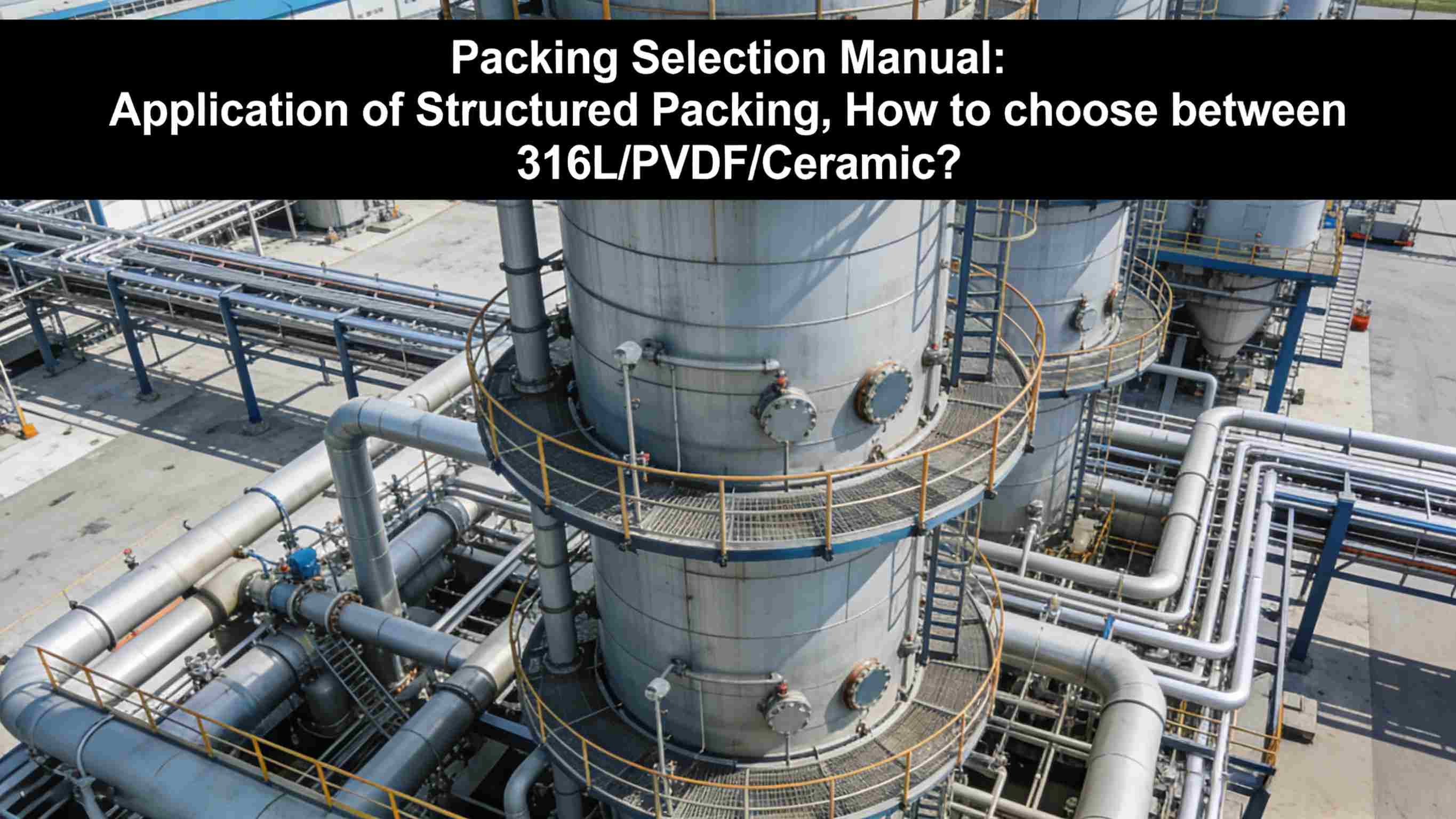
Procurement officers often receive quotes simply labeled "316L," "PVDF," or "ceramic." Behind these names lie vastly different performance boundaries and cost logic. Only by truly understanding material characteristics can sustainable choices be made.
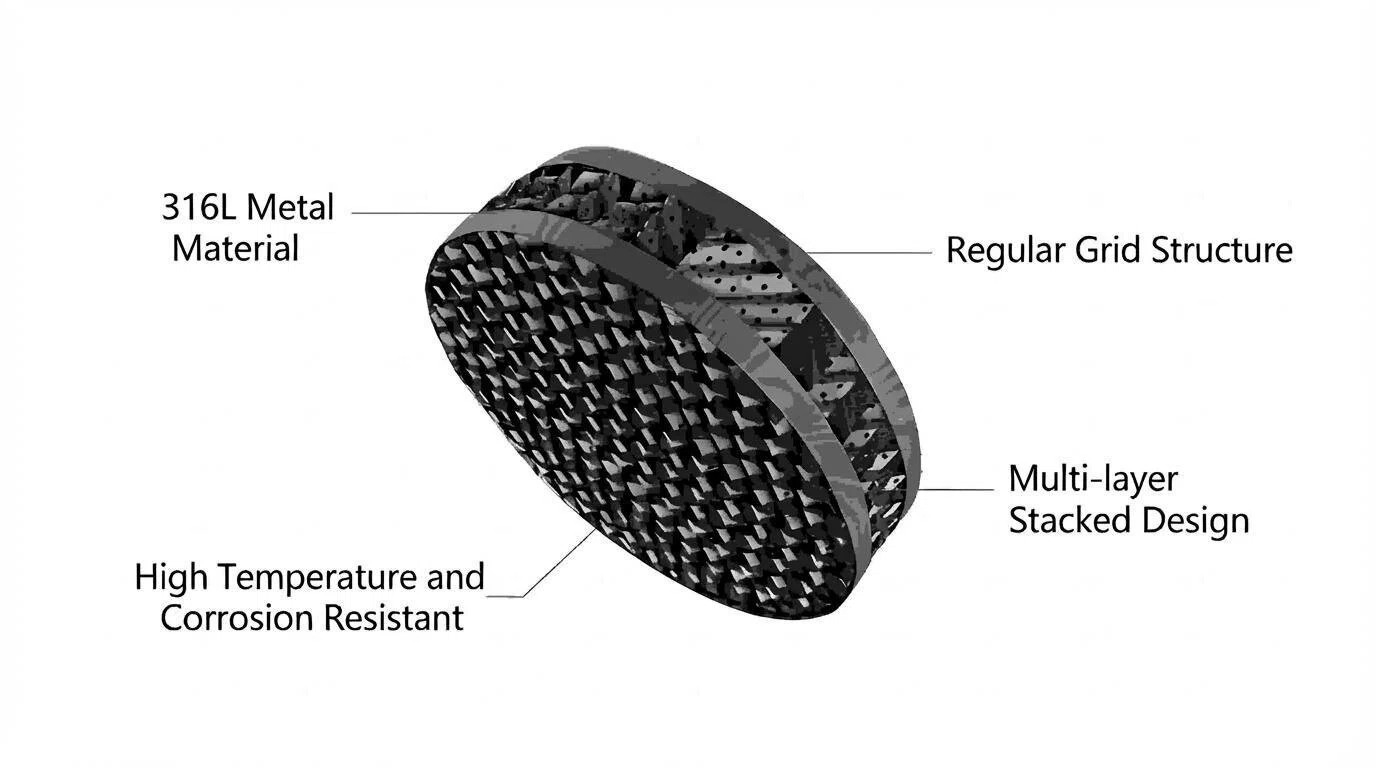
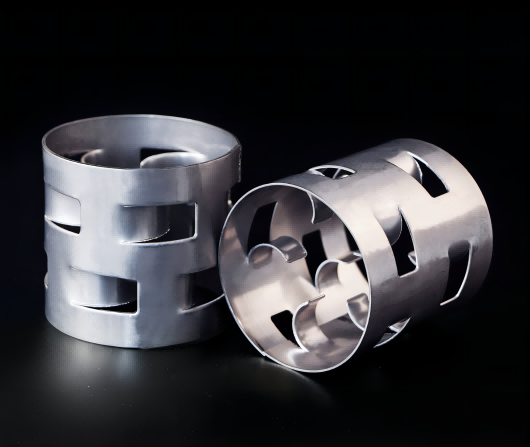
316L is the most common "standard material" with transparent market supply, numerous suppliers, and easily comparable prices, often viewed as a "reliable, durable" choice.
316L offers high mechanical strength, suitable for tall towers and heavy-load conditions, with good high-temperature resistance (up to 450°C). However, its fatal weakness is Chloride-Induced Stress Corrosion Cracking (CISCC).
In environments containing water, chloride ions (>50ppm), and temperatures above 60°C, cracking risk increases dramatically—this isn't ordinary corrosion but sudden, brittle fracture with minimal warning signs, potentially causing serious incidents.
Choosing 316L means you must have absolute certainty about chlorine content in raw materials and operational temperature fluctuations. Otherwise, it becomes a hidden "time bomb" that may cause unplanned shutdowns, completely derailing project commissioning and ROI calculations.
Recommendation: Strictly limit to clearly chlorine-free or very low-chlorine conventional high-temperature, high-pressure conditions. In situations with uncertainty, its initial "low price" may be meaningless.
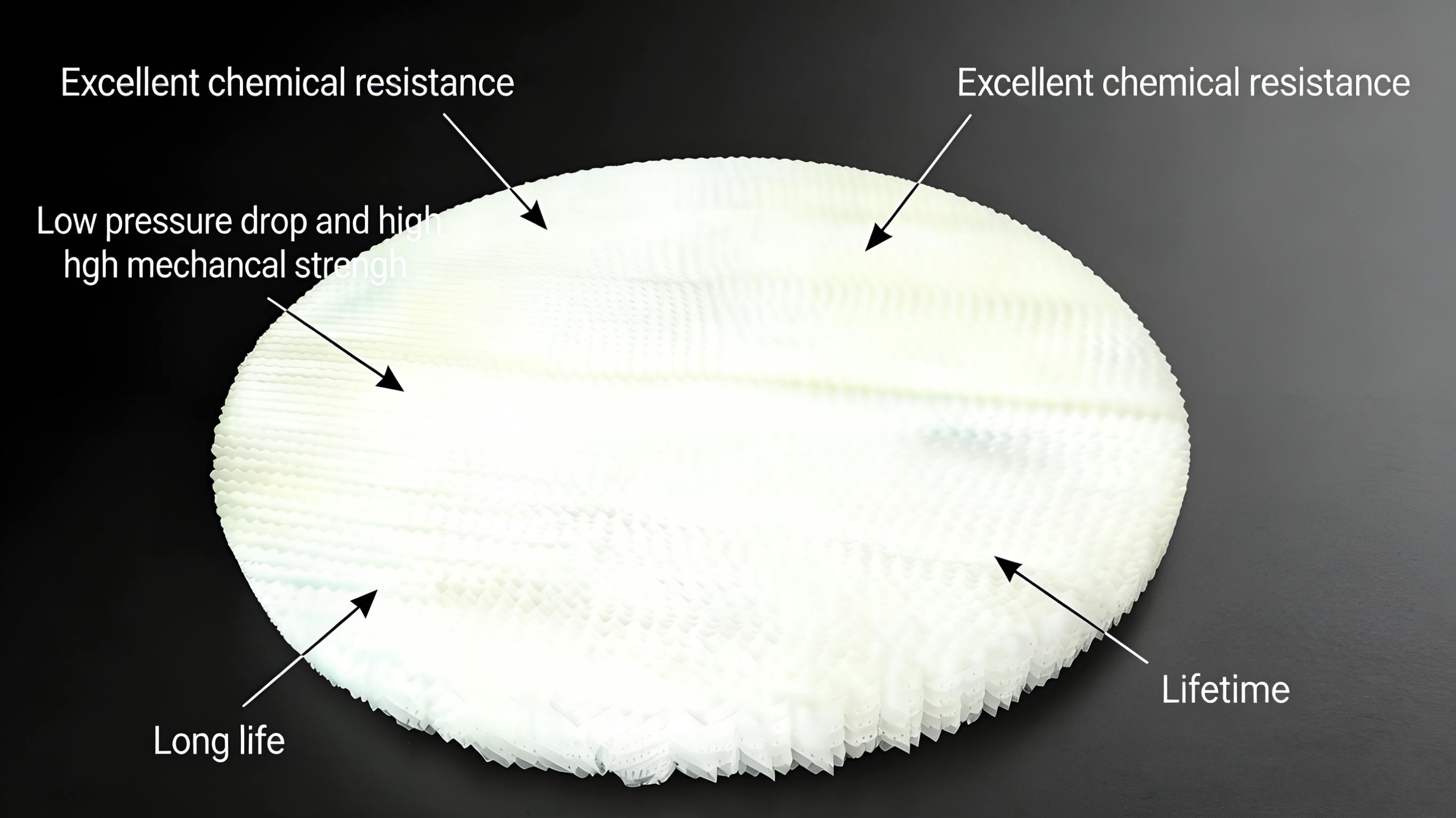
As a "plastic" material, PVDF typically costs more than standard 316L, often raising the question: "Why not use cheaper metal?"
PVDF exhibits excellent corrosion resistance to strong acids, strong alkalis, halogens (chlorine, fluorine, etc.), and most solvents, making it the preferred or only choice for lithium battery electrolyte wastewater, fluorine/chlorine-containing acidic gases, high-concentration chemical wastewater, and other corrosive media.
Note its long-term service temperature limit is generally 140-150°C; exceeding this reduces mechanical performance.
PVDF packing is lightweight (about 1/5 of metal), offering multiple hidden cost savings: installation time can be reduced by over 30%, and later inspection, cleaning, or replacement labor and safety costs are significantly lower. In frequently maintained conditions, its lifecycle cost advantages are substantial.
An electronic chemicals company used PVDF structured packing for strong acid mixture separation. After 5 years of continuous operation, tower inspection showed the packing structure remained intact, avoiding high-end product scrap risks from metal ion contamination. The client calculated avoided quality losses far exceeding the packing price difference.
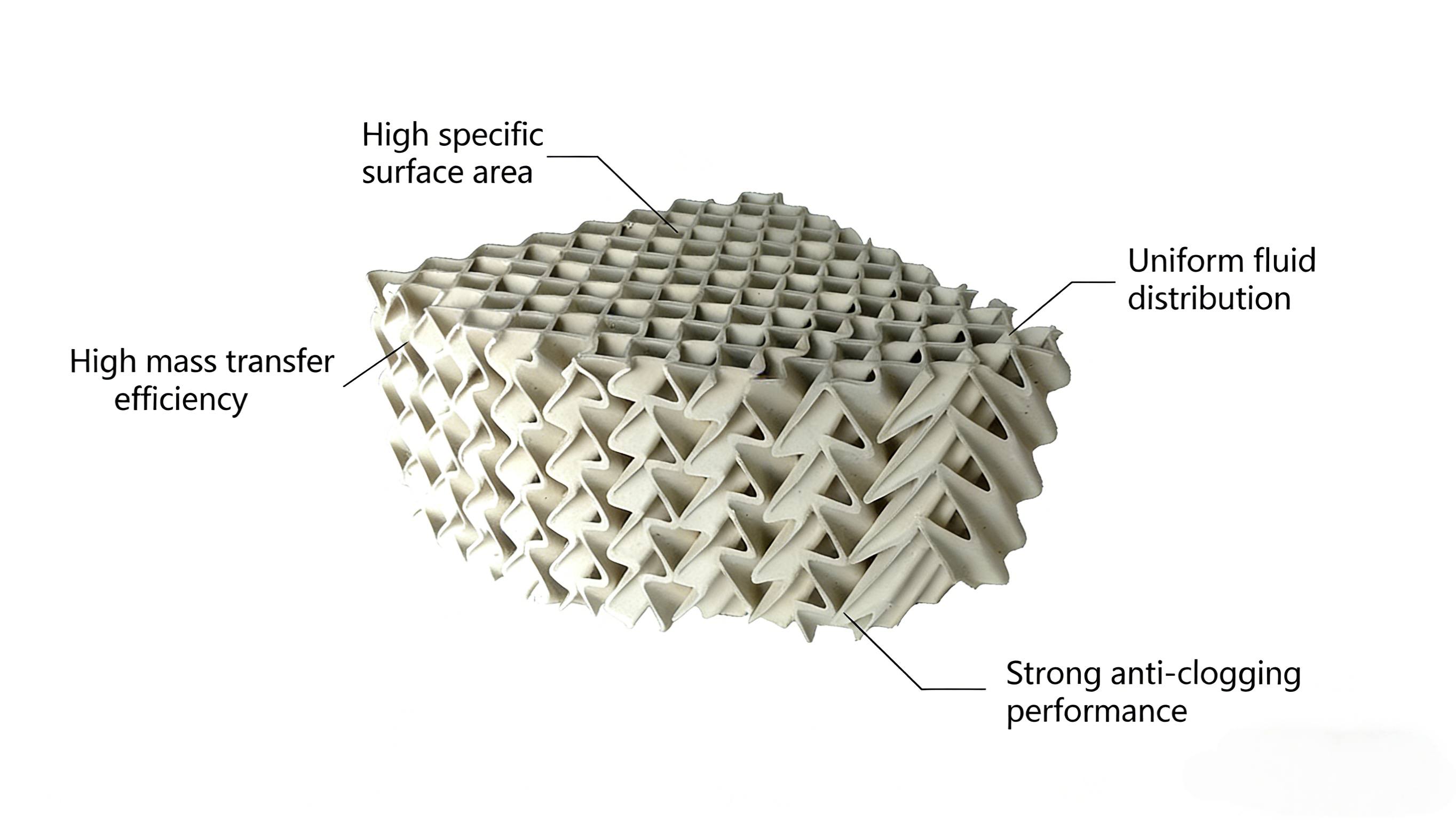
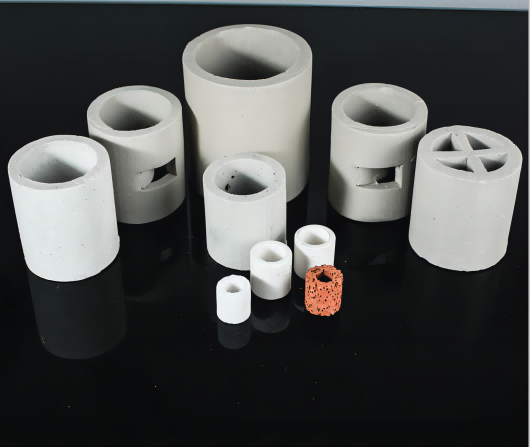
Ceramic packing is expensive, often viewed as the "last resort."
Its irreplaceability stems from exceptional temperature resistance (over 1000°C) and corrosion resistance (resistant to all solvents except hydrofluoric acid), making it the only feasible option for high-temperature gas purification, phthalic anhydride production, coking desulfurization, and other extreme environments.
Core risk lies in brittleness. It fears mechanical and thermal shock, requiring high installation quality.
Choosing ceramic packing is essentially paying a "premium" for long-term stable operation under extreme conditions. Once selected, installation guidance, heating curve control, etc., must be written into strict construction and operational specifications, with supplier on-site technical support capabilities as a key assessment factor.
In material selection decisions, initial purchase price is just the tip of the iceberg. True cost assessment should be based on lifecycle Total Cost of Ownership. The table below provides a TCO comparison framework for three mainstream materials:
Note: This table serves as a comparative analysis framework; specific values should be determined based on actual conditions, supplier quotes, and risk assessment.
| Cost Item | Option A (316L) | Option B (PVDF) | Option C (Ceramic) | Remarks |
|---|---|---|---|---|
| 1. Procurement Cost | (Quote) | (Quote) | (Quote) | Based on equivalent performance specifications |
| 2. Installation Cost Estimate | Standard | 30% reduction (lightweight) | May increase (requires special guidance) | Includes lifting, labor, construction time, etc. |
| 3. 10-Year Energy Cost Estimate | Baseline | May be lower (pressure drop optimization) | Case-dependent | Related to packing efficiency, pressure drop characteristics |
| 4. Maintenance/Cleaning Cost Estimate | Standard | Significantly reduced | Standard | Considering tower opening frequency, cleaning difficulty, spare part replacement |
| 5. Expected Lifespan | 5-8 years (risk-dependent) | 10-15 years+ | 10 years+ (if properly installed) | Directly affects replacement cycles and capital expenditure |
| 6. Risk Cost (Assessment) | High (if chlorine present) | Low | Medium (installation risk) | Requires technical assessment of probability and losses |
Risk Cost Calculation Example: Assuming in chlorine-containing conditions, 316L packing has a 25% probability of corrosion failure within 5 years, with single incident losses (shutdown + replacement + order loss) estimated at 8 million RMB, the expected risk cost is: 8M × 25% = 2 million RMB. This should be included in TCO analysis.
To align technical, procurement, and project objectives, decision-making must evolve from "intuition" and "convention" to "data" and "process."
Before requesting quotes, the technical department should lead in preparing a "Process Task Book" specifying:
This document, signed by technical and project leaders, serves as the common foundation for subsequent evaluations.
The procurement department, based on the "Process Task Book," requests quotes from qualified suppliers like Ayrtter that offer multiple material options. Evaluation should use the TCO framework above, requiring detailed cost breakdowns rather than just total prices.
Key Actions:
The project director convenes technical, procurement, and finance departments for a risk vs. benefit decision meeting. The core is quantifying "risk cost," transforming hidden risks into comparable economic data.
Technical Department: "Based on media analysis, chlorine ion concentration is in the critical range (45-60ppm). If 316L is used, the probability of chloride-induced stress corrosion cracking within 5 years is assessed at 20%-30%."
Procurement Department: "We've obtained quotes from three suppliers. The 316L option is 35% cheaper initially than PVDF. But if corrosion leakage occurs, the finance department estimates single unplanned shutdown direct losses plus emergency repair costs at 8 million RMB."
Project Director: "Thus, the 316L option's hidden risk cost expectation is 1.6 to 2.4 million RMB. Even if the PVDF option costs 35% more than 316L, its TCO is likely lower, and it eliminates the biggest operational risk. I decide to adopt the PVDF option."
Through such quantitative analysis, technical risks are translated into economic language, enabling more objective, scientific decisions.
Once the decision direction is clear, conduct multi-dimensional capability verification of intended suppliers:
| Verification Dimension | Inspection Points | Key Questions |
|---|---|---|
| Technical Documentation Depth | Can they provide corrosion test data for your specific media or authoritative compatibility reports? Are material certification documents complete? | Are there third-party test reports? Does the material meet international standards? |
| Similar Performance Evidence | Do they have successful project cases in completely similar or more苛刻 conditions? Can they provide user contacts for verification? | How long have cases been operating? Is there operational data support? |
| Comprehensive Service Capability | For special materials like ceramic, can they provide professional installation guidance? For PVDF, do they have lightweight installation solutions? Does their project experience demonstrate ability to solve complex engineering problems? | Do they provide on-site technical support? Do they have emergency plans? |
Structured packing selection is essentially a technology-driven risk management investment:
When all three parties communicate using a unified "Process Passport," TCO model, and risk quantification language, they can make value-maximizing decisions. We recommend immediately applying this framework in your next project.
Core Recommendation: In structured packing selection, don't just focus on initial purchase cost. Instead, comprehensively consider material corrosion resistance, operating condition compatibility, installation/maintenance convenience, and potential risk costs, making scientific decisions through lifecycle cost analysis.
Through systematic, data-driven selection methods, avoid the trap of "low-price procurement, high-cost maintenance," achieving long-term stable plant operation and true cost optimization.
 Address : Intersection of Jinguang Avenue and Chongqing Middle Road, Anyuan Industrial Park, Anyuan District, Pingxiang City, Jiangxi
 Tel : +86-18507999558
 Email : sales@fxsino.com
 WhatsApp :
+86-18507999558
WhatsApp :
+86-18507999558 IPv6 network supported Sitemap | XML | Blog | Privacy Policy